For years, the global economy has operated under the assumption that the geopolitical friction in the Middle East would remain confined to proxy skirmishes and localized disruptions. In late March 2026, that foundational assumption collapsed. The escalation into direct military confrontation involving the United States, Israel, and Iran has immediately shifted the global energy market from a state of cautious, managed balance into an acute, systemic crisis.
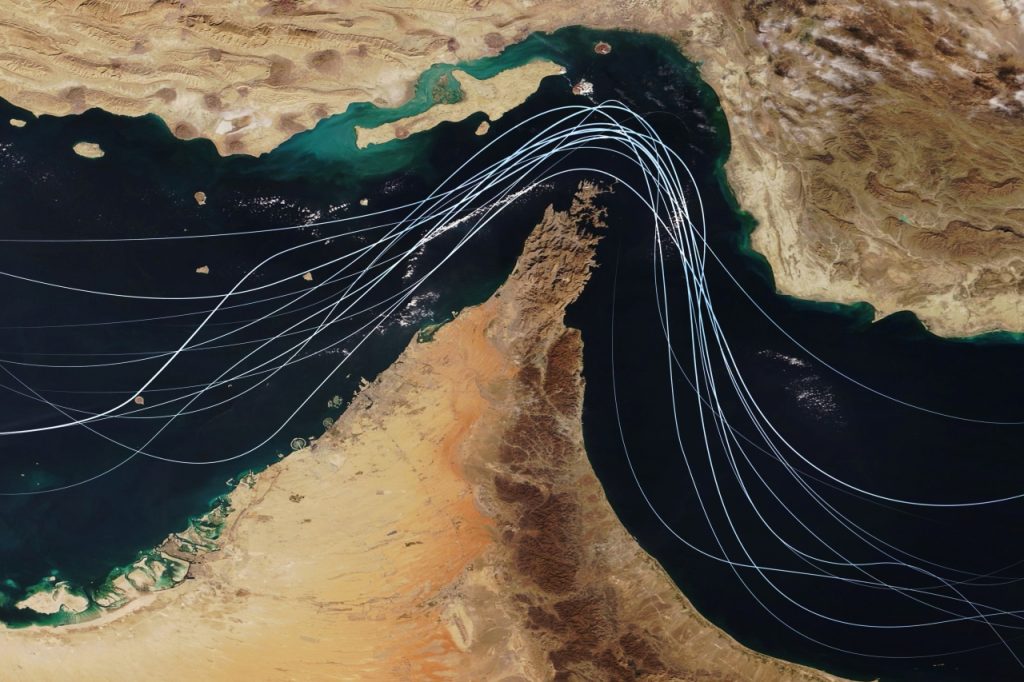
The epicenter of this economic shockwave is not the battlefields themselves, but a narrow, 21-mile-wide waterway: the Strait of Hormuz. As the world’s most critical oil transit chokepoint, it serves as the irreplaceable artery for approximately 20% of global daily petroleum consumption. Today, the integrity of that artery is under unprecedented threat, forcing corporate boardrooms and central banks to rapidly digest a worst-case scenario.
The $100 Breach: Algorithmic Panic and Institutional Hedging
The market reaction to the outbreak of direct hostilities in late March was instantaneous and violent. Brent crude futures, the international benchmark, aggressively breached the critical $100-per-barrel threshold.
This pricing surge was not driven by an immediate physical disruption of supply, but by massive, synchronized institutional hedging and algorithmic trading. Markets are highly forward-looking mechanisms; they are currently pricing in the imminent, existential threat of maritime blockades, the mining of transit corridors, and retaliatory kinetic strikes on deeply concentrated Gulf energy infrastructure. The “geopolitical risk premium”—previously hovering at a modest $5 to $8 a barrel during the earlier Red Sea disruptions—has now ballooned, reflecting the binary risk of a total regional supply shutdown.
An Asymmetric Shock: The East-West Divide
While a sustained disruption in the Persian Gulf constitutes a massive shock to the global economy, the impact is severely asymmetric.
The United States, while financially exposed to global price spikes, possesses a robust physical energy buffer. Unprecedented domestic shale oil production and strategic reserves provide North America with a degree of insulation against absolute physical shortages.
However, the reality for the Eastern Hemisphere is drastically different. The economic engines of Asia—particularly China, Japan, India, and the manufacturing powerhouses of the ASEAN corridor—are hyper-dependent on unimpeded flows of Gulf crude and Liquified Natural Gas (LNG). Unlike the United States, these nations lack the domestic production capacity to offset a prolonged Hormuz closure. For these economies, the crisis is not merely about managing inflation; it is about maintaining baseline industrial continuity and preventing rolling blackouts.
The Supply Chain Contagion
For multinational corporations, the fallout from this energy shock extends far beyond the price at the pump. The contemporary global supply chain is heavily optimized, deeply interconnected, and highly sensitive to petrochemical inputs.
This energy shock will cascade rapidly through industrial balance sheets. The most immediate impact will be felt in transportation logistics, where aviation fuel and maritime bunker costs will decimate profit margins for global freight. Beyond logistics, petroleum and natural gas are the foundational feedstocks for the global petrochemical industry. A prolonged price spike will severely inflate the cost of plastics, synthetic fibers, industrial resins, and agricultural fertilizers.
Manufacturing overheads across virtually every sector—from automotive assembly to consumer electronics and advanced pharmaceuticals—will experience aggressive margin compression as these input costs surge.
The Death of the Rate-Cut Narrative and the Specter of Stagflation
Perhaps the most profound macroeconomic consequence of the March 2026 escalation is its impact on global monetary policy. Entering the year, the prevailing narrative among equity markets was that major central banks, including the US Federal Reserve and the European Central Bank, were poised to execute a series of interest rate cuts.
The Hormuz crisis threatens to completely dismantle that narrative. Surging energy prices inject immediate, aggressive cost-push inflation back into the global system. Central bankers are now trapped in an excruciating dilemma: cut rates to support a fracturing, war-weary global growth outlook, or hold rates punitively high to combat a renewed inflationary super-cycle driven by energy costs.
This dynamic drastically increases the probability of a global stagflationary environment—a toxic combination of stagnant economic growth and high inflation.
Strategic Conclusion
The escalation of conflict in the Middle East has definitively ended the era of cheap, reliable energy transit. The Strait of Hormuz is no longer just a geographical feature; it is the single largest vulnerability in the global macroeconomic architecture.
For C-suite executives and institutional investors, the strategic outlook is unforgiving. Corporate resilience now requires stress-testing balance sheets against sustained triple-digit oil prices and preparing for a deeply volatile foreign exchange environment. The geopolitical premium on energy is no longer a temporary aberration—it is the new, structural reality of global commerce.
Source:
https://www.iea.org/reports/oil-market-report-march-2026
https://solability.com/news-insights/iran-war-marginal-cost
https://www.arcenergyinstitute.com/strait-of-hormuz-closure-and-the-oil-price-roller-coaster/